

MAPUSA
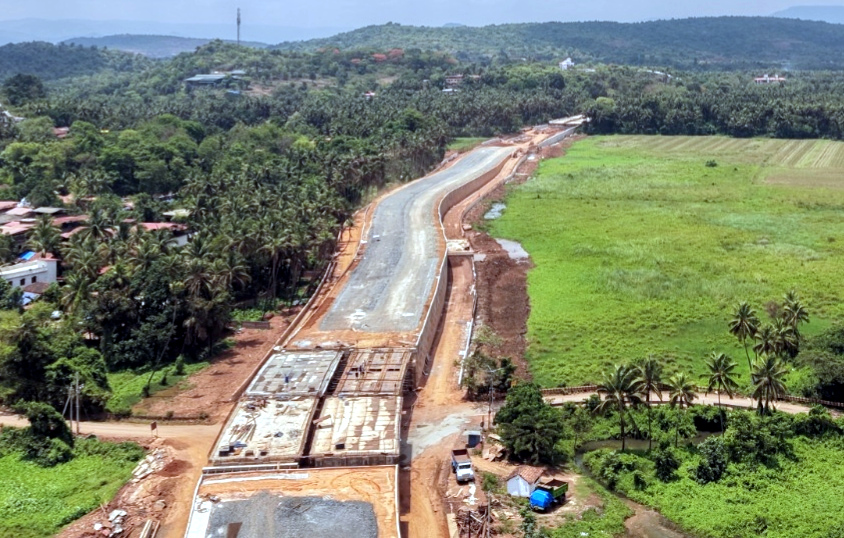
The much-awaited Porvorim elevated corridor has crossed another significant milestone, with the project entering the crucial load testing phase, bringing it a step closer to being commissioned before Ganesh Chaturthi.
PWD Principal Chief Engineer Sandip Chodnekar said the load testing is one of the final and most important stages before the elevated corridor can be declared fit for public use and commissioned.
"Load testing is an essential process carried out to assess the structural performance and stability of the bridge under simulated traffic loads. It is one of the major milestones in the completion of the project, and we are on track to commission the corridor on the eve of Chaturthi," Chodnekar said.
He informed that the civil works on the 5.15-km elevated corridor are largely complete, with only the final asphalt wearing course remaining to be laid. "We now require around eight to fifteen days of dry weather to undertake the final asphalt surfacing. Once weather conditions permit, the remaining work can be completed within that period. All works have been progressing smoothly to ensure that the project is ready before Chaturthi," he added.
According to PWD officials, the landing approaches on both ends of the elevated corridor have already been completed, while electricity poles have also been erected along the entire stretch. Finishing works, including road markings, installation of safety features and other ancillary works, are progressing simultaneously.
The load testing exercise involves placing calibrated loads at designated locations on the structure to verify its strength, stability and behaviour under stress. The results are evaluated against the design specifications before the bridge receives the necessary clearances for opening to traffic.
The Porvorim elevated corridor is one of Goa's biggest road infrastructure projects and is expected to significantly ease congestion on the busy NH-66 stretch.
Once operational, the elevated road is expected to drastically reduce travel time for commuters travelling towards Panaji and North Goa, particularly during peak tourist seasons and festive periods.